Mosquito Bites in Hell
MOSQUITO INTRUDERS OVER BURMA
The Burma campaign was among the most brutal and unforgiving theatres of the Second World War: a vast battlefield of dense jungle, monsoon rains, rugged mountains and oppressive heat. Here, the margin between survival and disaster was often razor thin. For Allied forces and the Mosquito crews sent deep into Japanese-held territory, the stakes could hardly have been higher. Each sortie contributed not only to intelligence gathering, precision attack and air superiority, but to the wider struggle for control of a front that stretched across thousands of miles and affected the lives of millions.
Operating deep behind enemy lines, Mosquito crews faced a deadly combination of threats: Japanese fighters, anti-aircraft fire, violent weather, difficult terrain and the ever-present risk of mechanical failure far from friendly territory. A damaged aircraft could leave crews stranded in some of the most inhospitable terrain on Earth, where rescue was uncertain and survival far from guaranteed. Even the remarkable Mosquito was challenged by Burma’s punishing climate, with heat, humidity and tropical conditions placing additional demands on both machine and men.
Yet these crews continued to strike deep into enemy territory, carrying out reconnaissance, attack and intelligence missions that helped support the Allied advance across Southeast Asia. Their work was conducted far from the headlines, but it formed a vital part of the campaign against Japan. Author Jeremy Walsh explores the extraordinary story of the Mosquito crews who carried the war into the heart of Japanese-occupied Burma in this enthralling 5,000-word deep dive.
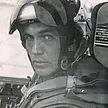
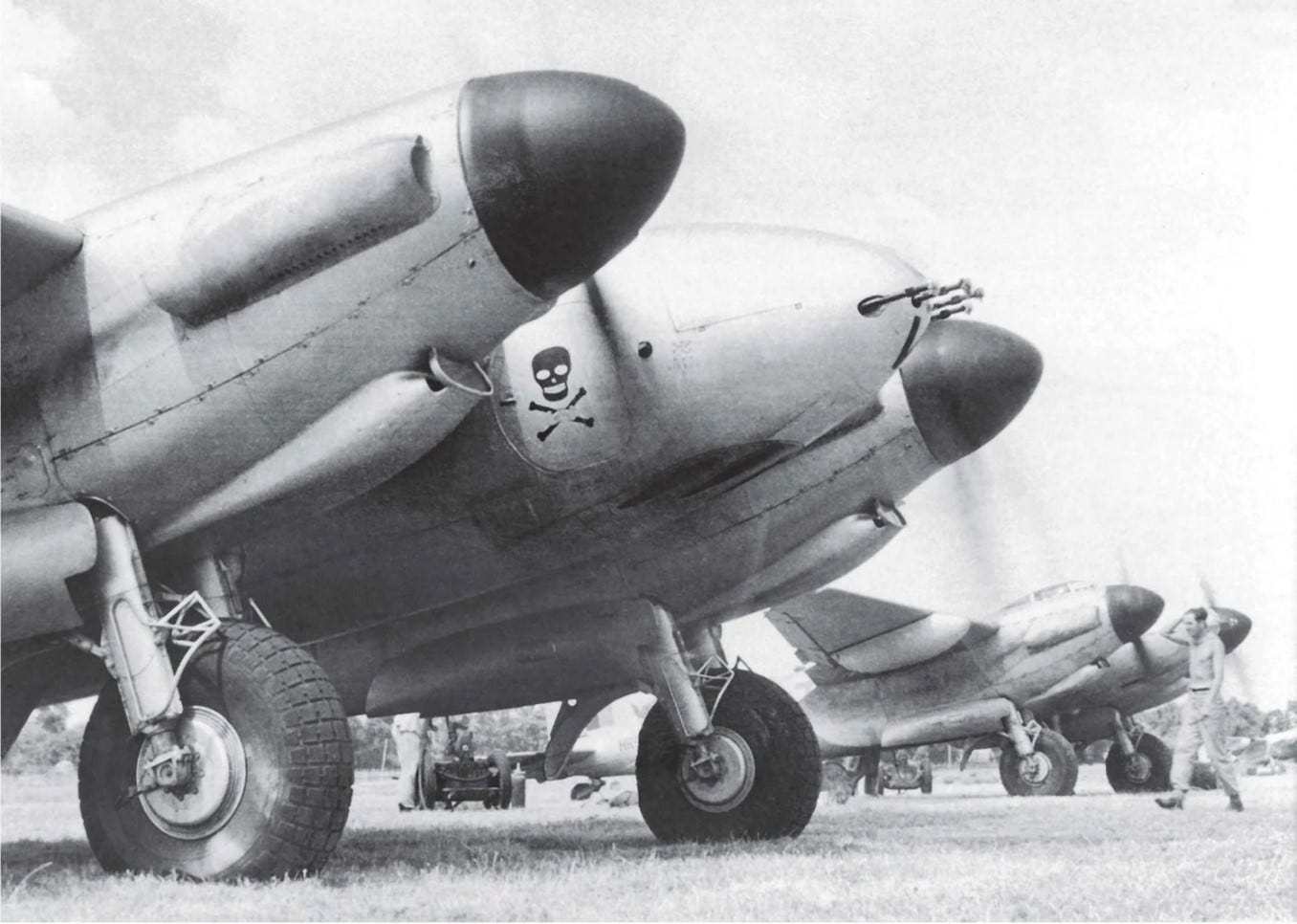
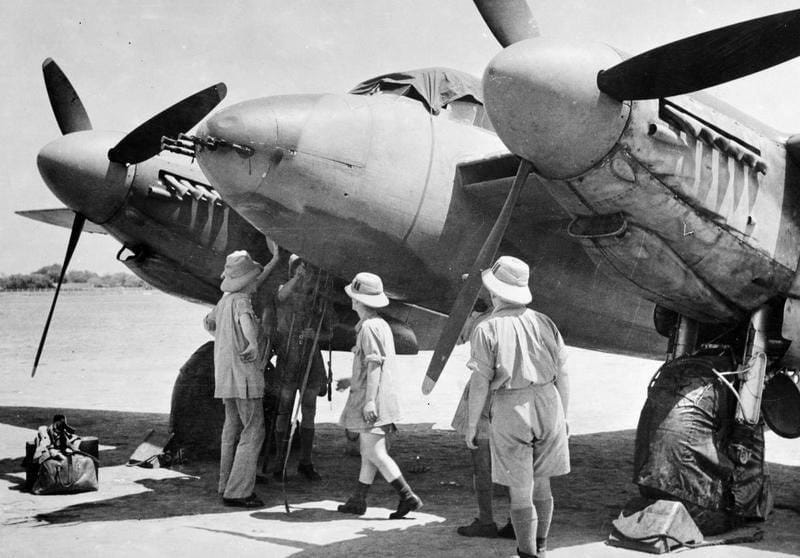
(all images: Jeremy Walsh)
What role did Mosquito intruder operations play in the Burma campaign compared with other RAF aircraft in the theatre?
After the Japanese started the war in the Far East with their audacious dawn attack on the large American naval base at Pearl Harbor on Hawaii on 7 December 1941, they swept through the Northern Pacific and Asian countries at a relentless pace, through French Indochina towards the British fortress island of Singapore. General Sir Archibald Wavell was appointed Commander-in-Chief of ABDACOM (American-British-Dutch-Australian Command), which covered the Far East and Australasia. The fall of Singapore in February 1942 caused shockwaves through the British high command, both due to local ineptitude and the brilliance of the unorthodox Japanese strategy, including cycling through ‘impenetrable’ jungle.
“He eventually brought the aircraft in to land…wheels up, at 200mph! The squadron medical officer, Flight Lieutenant Dawes, described it as ‘a spectacular but terrifying exhibition. Sqn/Ldr Tooth completely unmoved by the event. This officer is one of the most fearless – and ruthless – men I have ever met..”
With the fall of Singapore, ABDACOM was disbanded, and General Sir Archibald Wavell resumed his position as C-in-C India, now responsible for the defence of India and Burma. The Japanese continued their relentless drive towards India, with Rangoon falling into their hands on 9 March 1942. The RAF had long relegated the security of India and Burma to outdated and obsolete aircraft. In 1942, the Hawker Hurricane was their best fighter, and bombers were types withdrawn from the European theatre. Wavell realised that they needed to create air superiority, and for that they needed long-range strike aircraft that could also serve as fighters. Arguably in early 1942 there were only two operational British long-range aircraft that could meet his needs. There was the de Havilland Mosquito, which had recently entered service with several variants, and the Beaufighter, which was in demand in Europe and the Middle East as an interdictor and night fighter. The Air Ministry informed A.H.Q. India on 21 April 1942 that the Mosquito was experiencing ‘teething problems’ and ‘The need for long-range fighters your command already realised here and ways and means of providing Beaufighters are being urgently considered in consultation <with the>Admiralty.’
Although Beaufighters started being supplied later in 1942, it would be nearly a year after Wavell’s request, in spring 1943, that the Air Ministry despatched three F.Mk II Mosquitos to India for weather testing and evaluation.
How were Mosquito aircraft introduced into the India–Burma theatre, and what challenges did deploying them there pose?
Deployment first started with the three Mosquito F.IIs ferried to India for evaluation. Wing Commander ‘Harry’ Daish RAAF, 27 Squadron’s CO, had been notified in advance of a special detachment to his squadron based at Agartala but had kept the news on a “need-to-know” basis. David Innes, one of the squadron’s Beaufighter pilots, explained, ‘Much to the surprise of those at the aerodrome on the morning of 11 April 1943, a strange aircraft approached and was quickly identified as a de Havilland Mosquito. Mosquito Mk II DZ695 was to be attached to us for weather trials and operational familiarisation, becoming the first Mosquito sent to the tropics for this purpose. The crew, Flight Lieutenants McCullock DFC and Young, had flown the aircraft out from the U.K. One week later, a second Mosquito arrived, crewed by Flying Officer Fielding and Flight Sergeant Steer, and on 2 May a third, crewed by Flying Officers Dupee DFM and McDonnell were attached for the same purpose.’
These F.IIs were evaluated over the next couple of months by 27 Squadron. Unfortunately, on 3 May 1943, both Fielding and Steer were injured when their Mosquito, having suffered an engine failure, overran the end of Agartala’s runway during its emergency single-engine landing. DZ695 was written off, and Steer fractured his spine in the crash. Later that month, on 19 May, Flying Officers Dupee and McDonnell completed the first Mosquito intruder operation into Burma. They flew into central Burma and attacked a moving train, which was forced to stop. Ten days later, the same crew carried out the second operation, a reconnaissance of Japanese airfields in the Kanguang, Meikteila, Thedaw, and Heho areas. Over Heho, they encountered a Japanese Oscar fighter, but they avoided its attack by exploiting the Mosquito’s low-level speed.
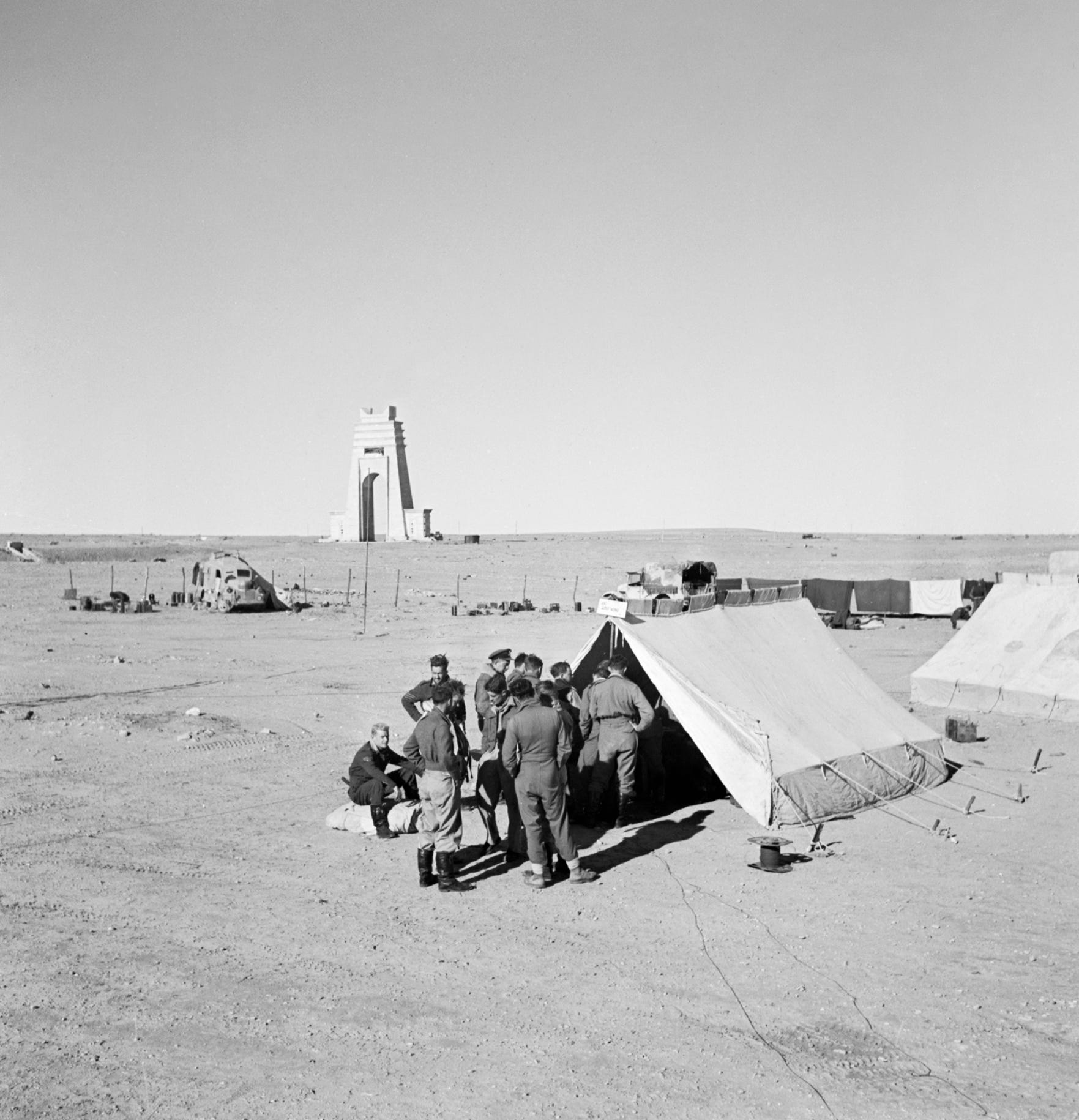
After two months detached to 27 Squadron, successfully demonstrating the Mosquito’s intruder and strike potential, interim reports about the Mosquito were sent to A.H.Q. India. The two surviving F.II Mosquitos and their crews were transferred to No. 684 Squadron at Dum Dum for photoreconnaissance evaluation.
In August, No. 301 Ferry Transport Unit, based at RAF Lyneham in Wiltshire, started sending the newly developed ‘intruder version’ of the Mosquito, the FB.VI, to India. This initially involved using experienced intruder aircrew to ferry the new Mosquitos to India in multiple stages. This was effectively why I started writing about Mosquito intruders in Burma. My father, Flight Sergeant Benny Walsh, had completed eighteen intruder ops in Douglas Bostons with No. 418 (RCAF) Squadron in the UK before he converted to the Mosquito FB.VI. In September 1943, he was then ordered to ferry a Mosquito to India. His route was Lyneham, Portreath (Cornwall), North Face (Gibraltar), Oujda (Morocco), Maison Blanche (French Algeria), Castel Benito (Tunisia), Marble Arch (Libya), Cairo (Egypt), Habbaniya (Iraq), Bahrain, Jawaani (Northwest India) and Mauripur (Karachi, Northwest India). His journey was cut short because he decided to drop his long-range tanks to extend his range after a rough-running engine over the Bay of Biscay. It turned out that there were no spare long-range wing tanks for Mosquitos outside the UK. Benny also suffered two engine failures on the journey, so he and ‘Ossie’ Orsborn, his navigator, endured nearly three hours of single-engine flight. On his arrival in India, he found out that the two FB.VI Mosquitos that had set off before him had both failed to arrive and the crews were dead. At only nineteen-and-a-half years old, Benny had delivered the first Mosquito FB.VI to India. Within six weeks, five additional intruder Mosquitos had arrived in India. As you would expect, the more Mosquitos they delivered, the better they became.
What was involved in converting experienced RAF crews to operate the Mosquito in combat conditions in Burma?
The conversion of 27 Squadron was really quite easy. They were experienced intruders, flying the Bristol Beaufighter in both day and night intruder roles. They were commanded at that time by Wing Commander ‘Nick’ Nicolson, who had been awarded the Victoria Cross during the Battle of Britain. Within a few weeks, they were ready. Pilots initially flew in the navigator position and were shown the controls and how to fly the Mosquito by one of the experienced pilots. Then they swapped positions. Then an experienced Mosquito navigator joined the newly converted pilot for some training flights, before the crews were reunited.
It was significantly more challenging the following year, when they decided to convert several dive-bomber squadrons to the Mosquito, starting with No. 45 Squadron. Although they had previously flown the Blenheim, many of the aircrew with 45 Squadron had only ever flown the single-engine US-built Vultee Vengeance. They needed to be converted on both role and aircraft type, as well as flying low-level during both day and night. This was a real challenge and the RAF set up a unit to handle the training, No. 1672 Conversion Unit at Yelahanka. RAAF pilot Bill Taylor recalled his introduction to the Mosquito at Yelahanka. ‘We had a few flights in a Bisley and also flew an Anson for the first time. Two Mosquitos have arrived and we are learning our cockpit drill.’ The cockpit made quite an impression on him. ‘There is not much room in the cockpit. You have to climb up a ladder and enter through a small door on the starboard side. If you have to bale out, you come out the same way, making sure you stop the starboard engine otherwise you get chopped up. Glad I never had to bale out!’ Quite a number of aircraft were damaged over the coming months, with more during the low-level training. At the end of the conversion, the aircrews were clear about their preference. Flying Officer Walter ‘Wal’ McLellan’s views on the conversion to the Mosquito were very clear; ‘a pilot’s dream compared to the obsolete Bristol Blenheims and the brute Vengeance dive bombers we had flown before.’
How did Mosquito crews initially find the aircraft’s performance in combat situations over Burma?
The Mosquito's rival was the established Bristol Beaufighter, [apocryphally] known as ‘the Whispering Death’. This had proven itself to be a good weapons platform and adept at both interdiction and strike. However, the Mosquito promised superior speed, range and payload. When the Mosquito first arrived in May 1943 with 27 Squadron at Agartala, it was greeted with some scepticism by Beaufighter crews, as noted by one of their pilots, David Innes. ‘The first reaction of the Beaufighter crews at Agartala was one of reservation, for the Mosquito did not seem to have the airframe strength desirable for low-level attacks where there was always the risk of hitting objects such as trees during attacks.’ I should note that the concept of low-level developed by the Beaufighter crews for Burma was really ‘nap of the earth’ flying, often just a few feet above the jungle tree canopy or briefly skimming above one of the rivers. It was not unusual to return with a piece of a tree attached to the aircraft!
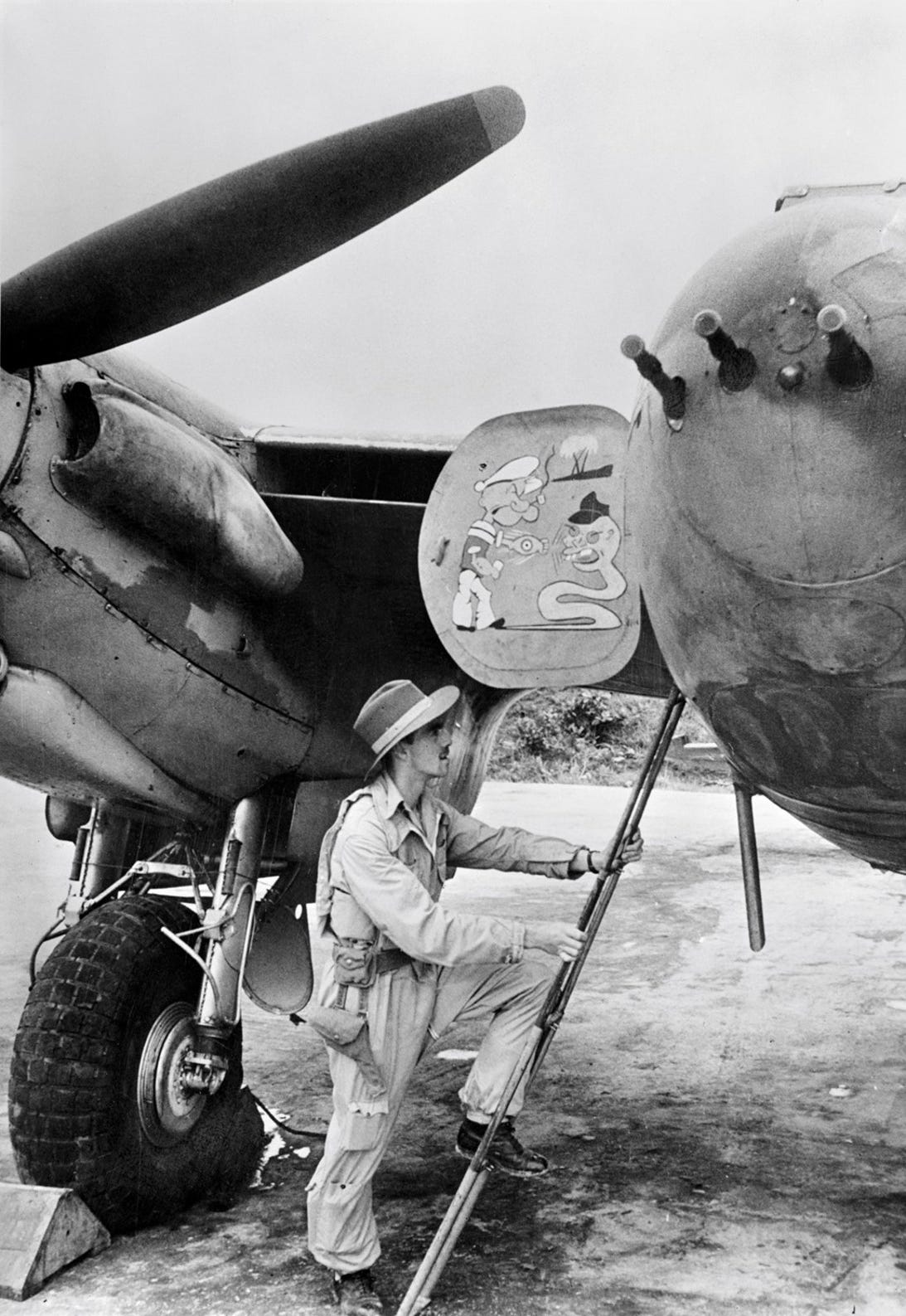
As soon as 27 Squadron received some FB.VIs and had completed the conversion of ‘A’ Flight to Mosquitos, the aircraft quickly demonstrated its capabilities. The first operation was on Christmas Day, 1944, and led by their CO, Wing Commander Nick Nicolson VC, the only person in Fighter Command to be awarded a VC in the Second World War. In the New Year, the squadron started expanding the Mosquitos’ range and targets. Having carried out an intruder operation to the outskirts of Rangoon at the end of the previous month, well beyond the range of their Beaufighters, on 12 February 1944, Flight Lieutenant Jock Torrance and Flight Sergeant Benny Walsh were tasked to fly a Mosquito pair even deeper into Japanese-held territory. Benny flew HX821/OB-K, with long-range tanks, for this sortie. As with their earlier op, they first flew both aircraft to RAF Ramu to top up their fuel. Then they set off southwards at low level towards Pegu to search for opportunity targets on the railway between there and Moulmein, to the southeast of Rangoon. Although neither crew saw any movements on the railway, there were plenty of targets ahead. Having turned to head home, just north of Bilini, Jock spotted and attacked a ‘large