The Bent-Wing Bastard
Review of Carrier Pilot by Norman Hanson
“The sheer waste of human life during training is bewildering, and Hanson’s catalogue of lost sailors is deeply disturbing.”
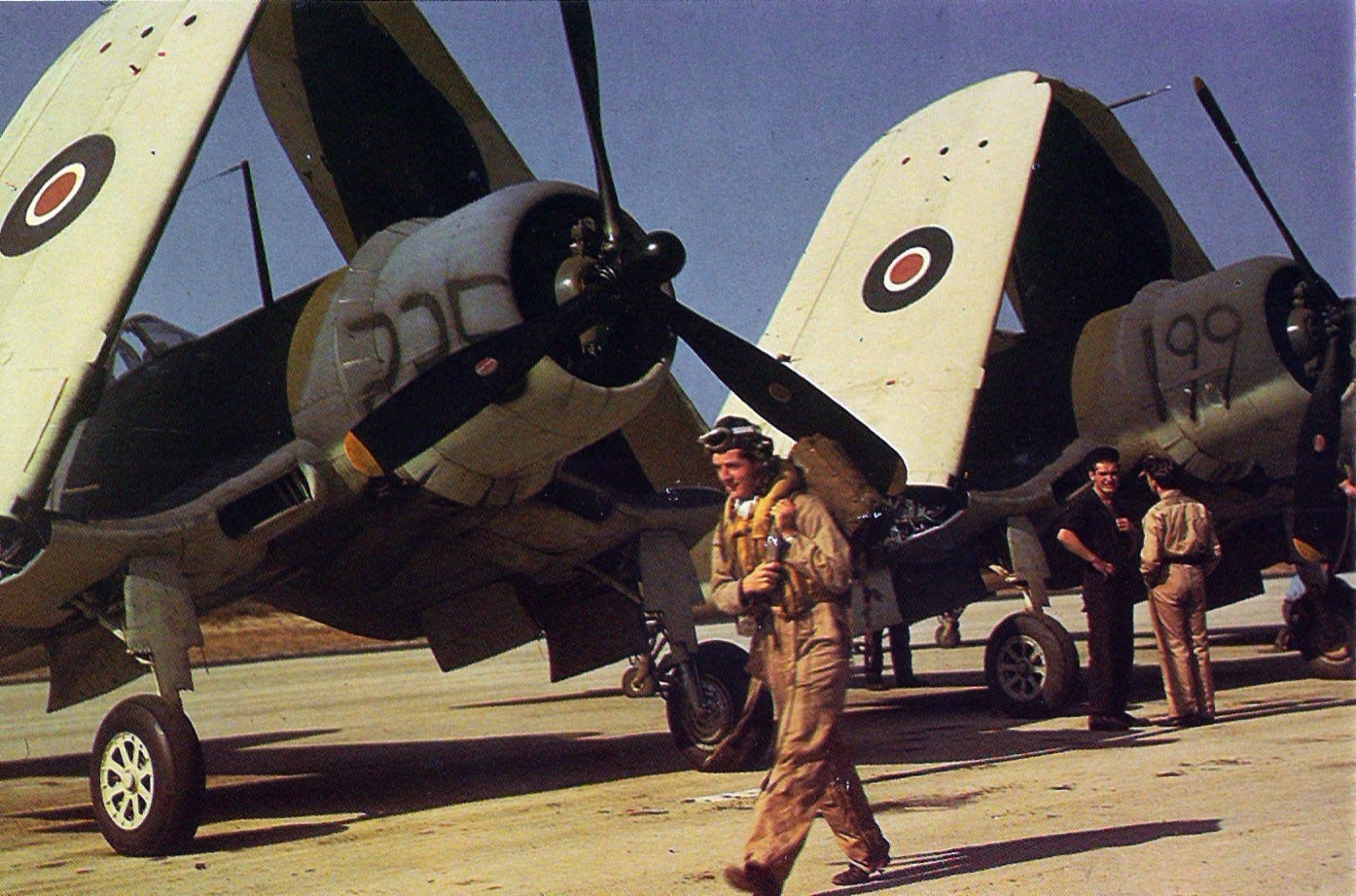
There are four different types of wartime pilot biographies: first, the gentleman and the dreamers, your Geoffrey Wellums and Saint-Exupérys; then the action-packed, like Clostermann’s Big Show and the shameful Blond Knight of Germany*; then the rather haunting child soldier book, like Briscoe’s Albert Ball, which is obscene, despite Briscoe’s best attempts to make it a rousing propaganda story. That leaves the final category, the toughie. Some Still Live by Frank G. Tinker Jr is an example of this: a fascinating memoir of a US pilot who fought in the Spanish War, written with a stylistic nod to Hemingway (whom he met during the war). This hard-bitten story is not so much about a loss of innocence as about what happens when an already tough and rather damaged person takes part in further traumatising war. It is in this fourth category that Carrier Pilot by Norman Hanson firmly sits. In reviewing this, I so comprehensively filled my copy with post-it notes that I became paralysed by the desire to cover every detail of interest. I just decided this would only be written if I raw-dogged it and wrote from memory alone, an approach more in keeping with the spirit of the Corsair. For any inaccuracies in this, blame the Corsair.
Very soon in the story, we find ourselves in Whitehaven**, a small harbourside town in Cumbria, which I know well from my childhood. This familiar location, plus the promise of a firsthand account of the Corsair, had me hooked. The next thing that wedded me to the book was one of Hanson’s ‘failings’. No disrespect to navigators, but I have always had a quiet prejudice against people who are good at navigating. So learning that Hanson was terrible at navigation made me like him, other qualities less so.
The war meets Hanson as a vast, complex, often illogical organism of logistics, sending him from corner to corner of the country, sometimes to the wrong place. Soon, the UK’s rain and cold are swapped for the glamour of NAS Pensacola (Florida) in America. Even then, US forces seemed well-funded and equipped relative to the FAA. The America he sees is a world of brawling sailors, cool cars and brothels. US attitudes toward the British airmen training in America resonate strongly today, as the international illiberal movement pushes to rupture US-UK relations . Prior to Pearl Harbor, the British airmen were often treated with open hostility, as parasitic foreigners dragging America into a war; post-Pearl, they became brothers-in-arms and heroes for their longer fight. There are many shocking moments that are glibly passed over. In Canada, it appears that his male friend was raped, which merits a sentence.
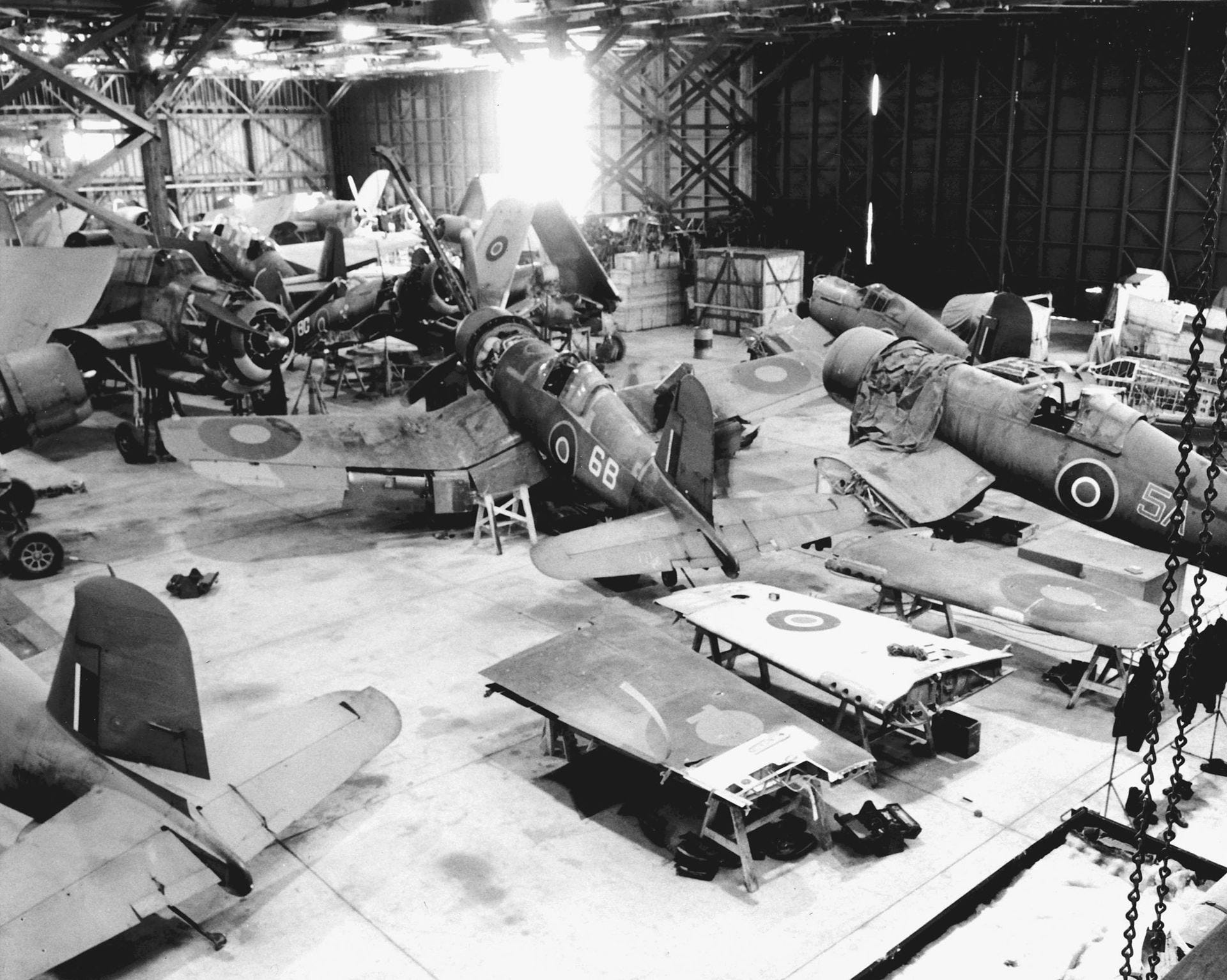
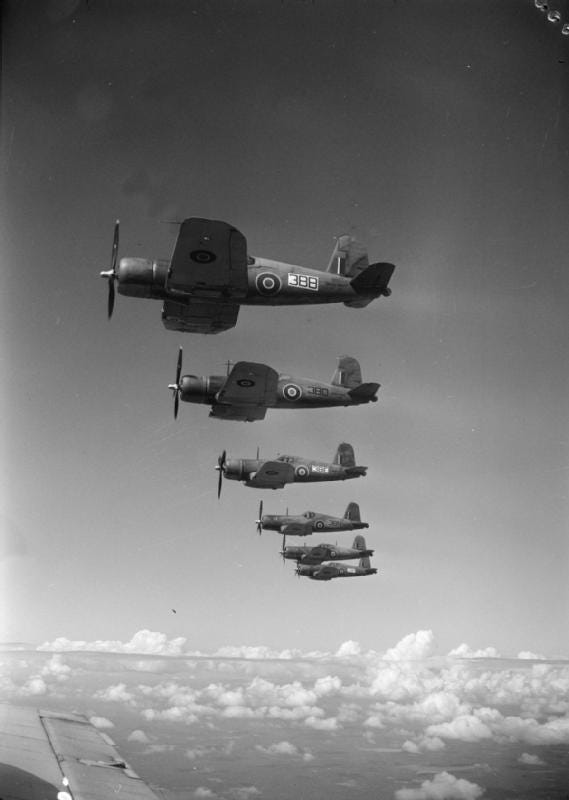
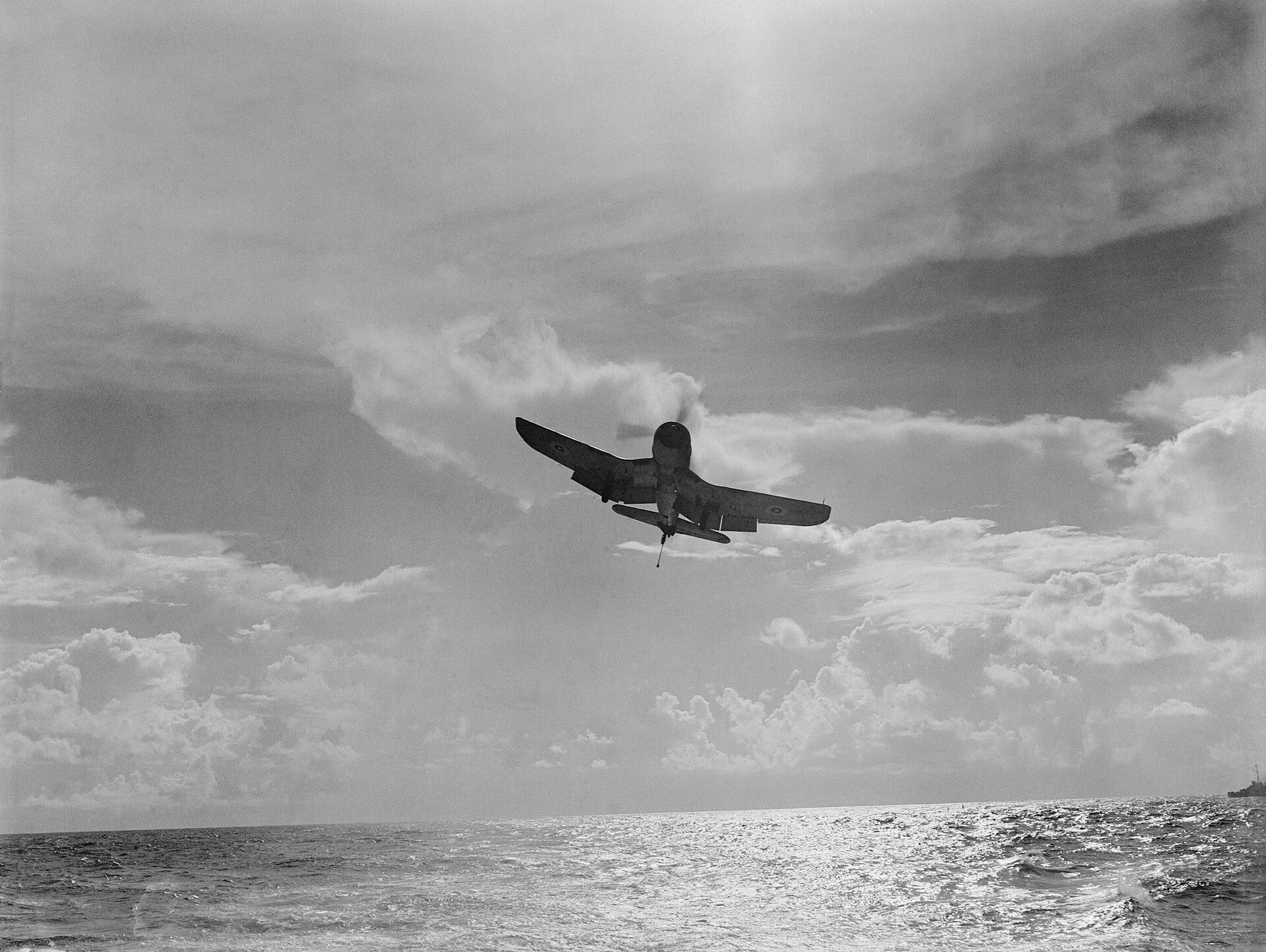
British aircraft, notably the Fulmar and Skua, were dependable but slow and obsolete; the Corsair was the opposite, cutting-edge, dangerous to friend and foe alike and unfeasibly fast. His trepidation on taming the Corsair, and in particular, the first deck landing, shortly following a lethal failed landing by a friend, can be keenly felt by the reader. The carnage of the training programme and, at least once, the foolishness of a young pilot are heartbreaking. The Japanese forces offered determined resistance to the British aircraft, but the Fleet Air Arm, the Corsair and its pilots all seemed to want pilots to die. The sheer waste of human life during training is bewildering, and Hanson’s catalogue of lost sailors is deeply disturbing. Operation Iceberg similarly sees most deaths coming from