The Case for the Messerschmitt Bf 109 Being the Greatest Fighter of the Second World War
Little Willy Energy Fighter
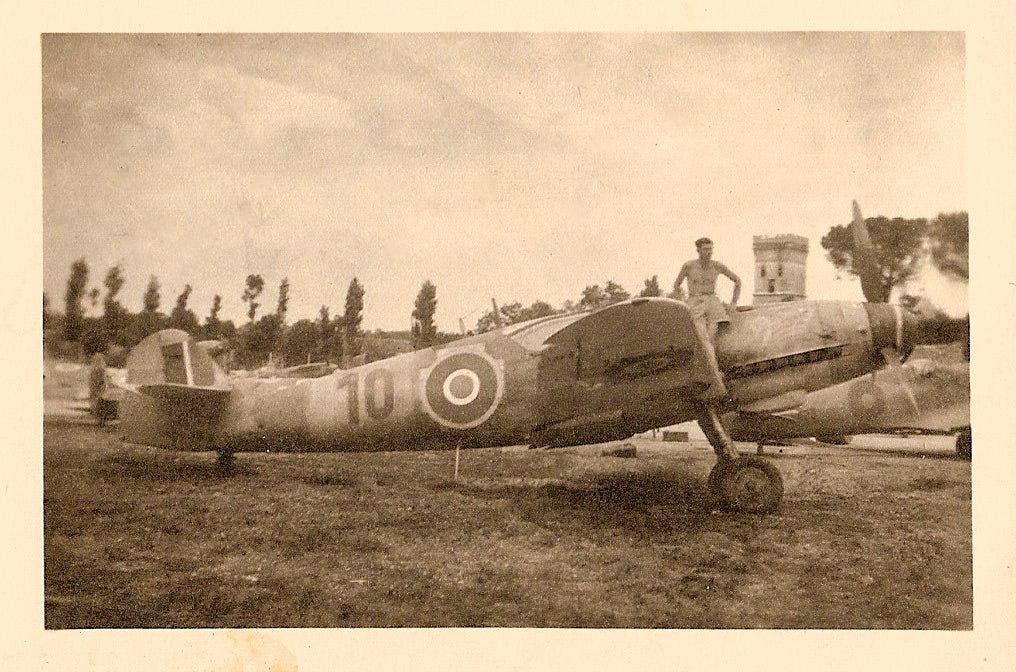
In the latest of a series of articles presenting cases for the greatest fighter aircraft of World War II, Jim Smith presents a case for the infamous Messerschmitt Bf 109. Let us know your thoughts in the comments section below.
The Messerschmitt Bf 109 was the greatest fighter of the Second World War.
A simple, bold statement, which many will question, based on their knowledge that other aircraft, in particular variants, were superior to particular variants of the Bf 109.
Nevertheless, if we look at the big picture, of duration in service, of numbers built, and of victories claimed, there can be little doubt that the Bf 109 deserves this accolade.
Firstly, the aircraft design ensured its initial success and immediate superiority. Messerschmitt combined all available technologies of 1934 to design a stressed-skin, retractable undercarriage fighter with the smallest and lightest possible airframe, powered by the most powerful available engine. Sharing many of these features with its great rival, the Spitfire, Messerschmitt took advantage of wing leading edge slots, and slotted flaps to reduce wing size without compromising landing speed and controllability at low speeds.
The aircraft enjoyed an initial operational period of superiority over all its competitors, with no match in combat in Spain, or in the initial campaigns of the Second World War in Poland and in France, where its superiority over the Hurricane was evident. Air combat with its British match, the Spitfire, did not occur until May 1940, during the evacuation of Dunkirk.
Contemporary comparisons of the Bf 109E with the Mk 1 Spitfire showed these aircraft to be closely competitive in air combat, with the Spitfire offering greater manoeuvrability due to its lower wing loading, and the Messerschmitt slightly higher speed, a higher climb rate up to 20,000 ft, and the ability to disengage from air combat at will by diving away, thanks to its fuel-injected engine.
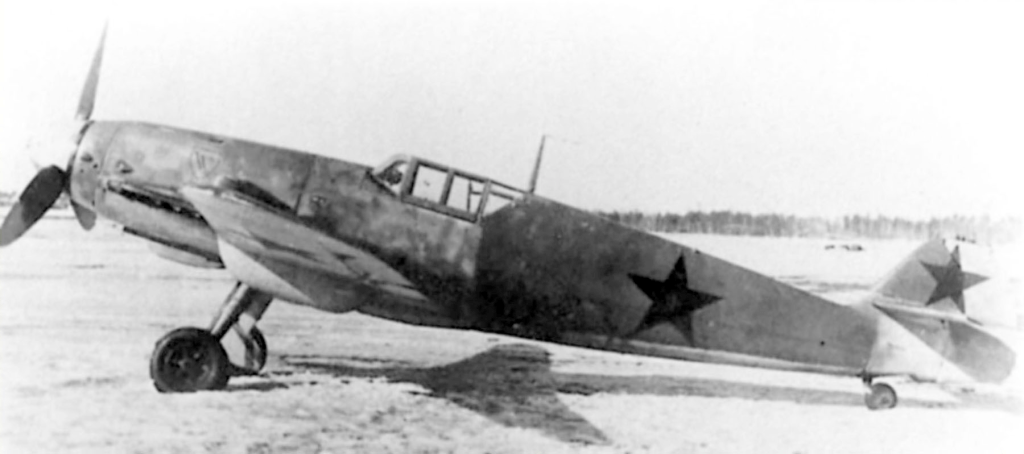
Secondly, continuous development kept the Bf 109 competitive with its opponents in the Western Theatre, and superior to its opposition in North Africa, and on the Eastern Front, at least until late in the war. Naturally, both the Spitfire and Messerschmitt were rapidly developed, each in an effort to out-perform their dangerous opponent, and this competitive development resulted in the Spitfire V, with two-stage supercharging, and cannon armament, appearing in 1941. The Bf 109 received extensive aerodynamic refinements and engine development, resulting in the Bf 109F, which came into service at about the same time as the Spitfire V.
Significant improvements to the Bf 109F included refinements to its cooling system, reductions in drag, and improvements to the flaps, slats, and ailerons. The armament was revised to remove the wing-mounted cannon in favour of an engine-mounted 20 mm cannon, and two fuselage-mounted 7.9mm machine guns. These changes improved both the manoeuvrability and climb rate of the aircraft; later models incorporated Nitrous Oxide