The Mosquito Origin Story
Speed, Walthamstow and Heroin Chic

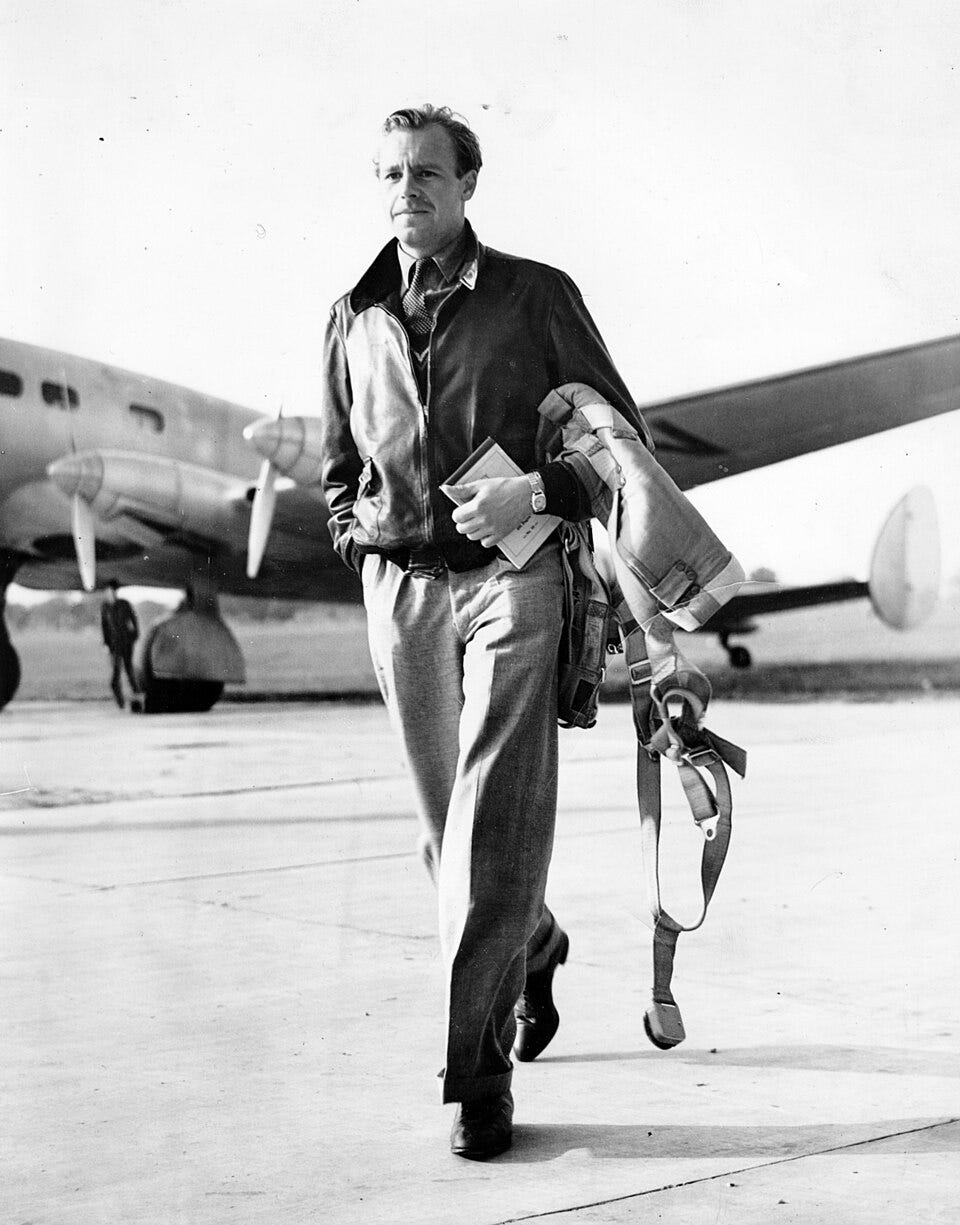
A man bombs around Crystal Palace on one of Britain’s first motorcycles. He created both the bike and the engine. A couple of years later, he lives in Walthamstow and is busy designing some of Britain’s first buses. He borrows £500 from his dad to make an aeroplane (and a new engine to power it). As this was 1906, this was the equivalent of £77,000 today. This twenty-four-year-old man was Geoffrey de Havilland.
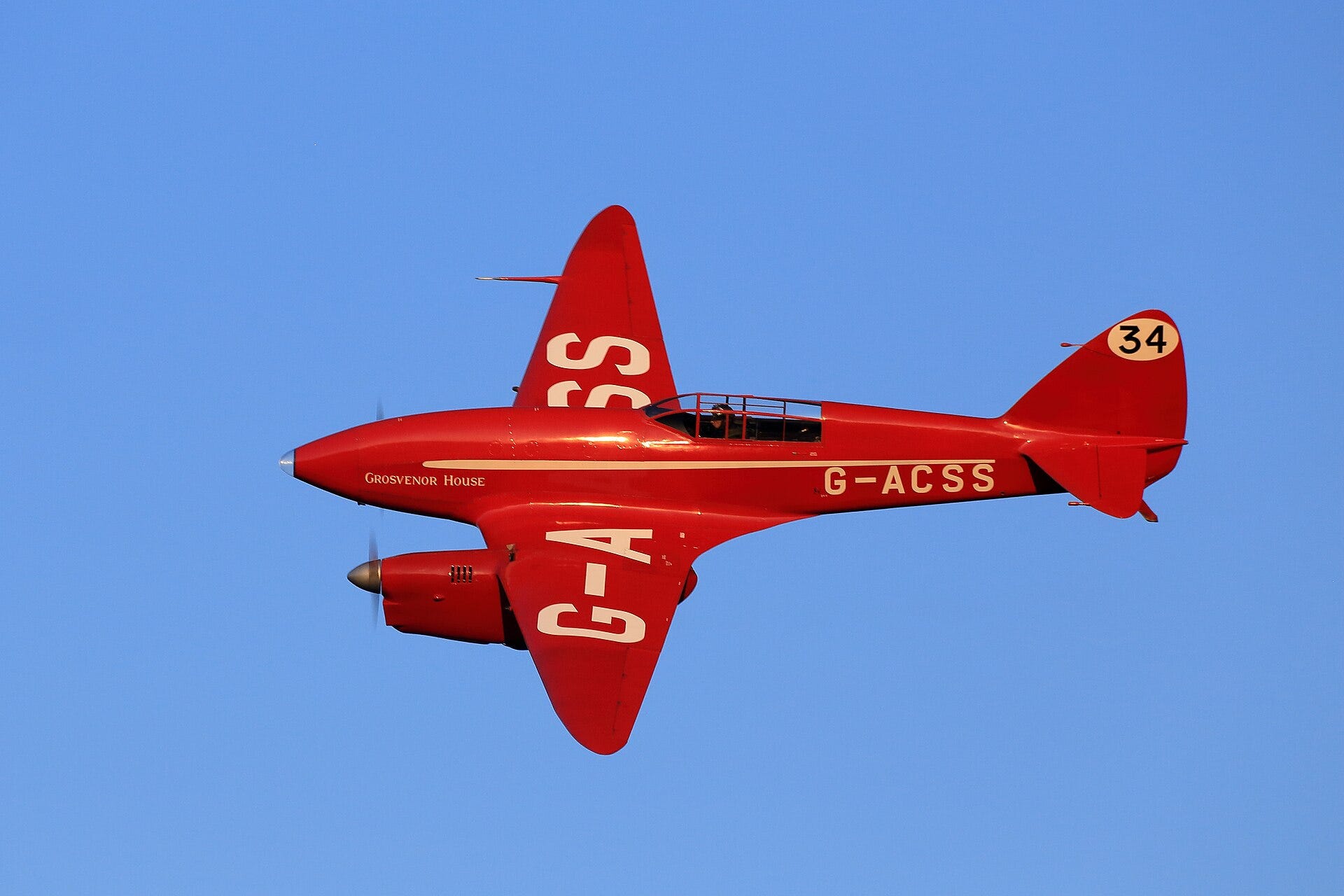
Twenty-seven years pass, and the world’s most beautiful object, the De Havilland D.H.88 Comet, wins an England-to-Australia air race. It combined a thin wing with variable-pitch airscrews and a retractable undercarriage, something even the radical Boeing 247 had only done eight months earlier. But the DH.88 combined these with far more advanced aerodynamics: an enclosed cockpit, a dainty elliptical wing curving into the fuselage, perky 205-horsepower Gipsy Sixes, and a dramatically raked-back tail; it was devilishly handsome. Futuristic, too, with little in common with other 1934 aircraft that were either barrels or bathtubs festooned with struts, too many wings, and more parasitical drag than RuPaul stealing your pension pot. Once painted glossy black or red, the DH.88 was almost too lovely to look at.
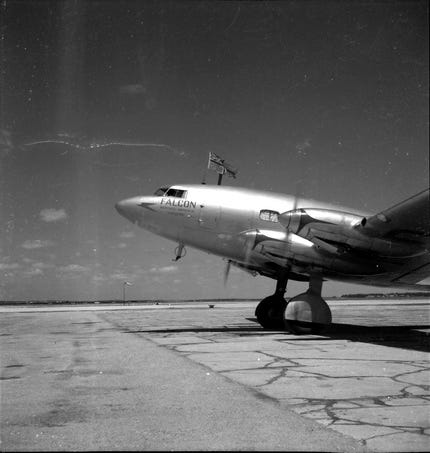
But de Havilland’s had not stopped his quest to make the world’s skinniest aeroplane; with the DH.91 Albatross airliner of 1937, this heroin-chic went from the wings to the fuselage. On mail and airline service they proved extremely fast.
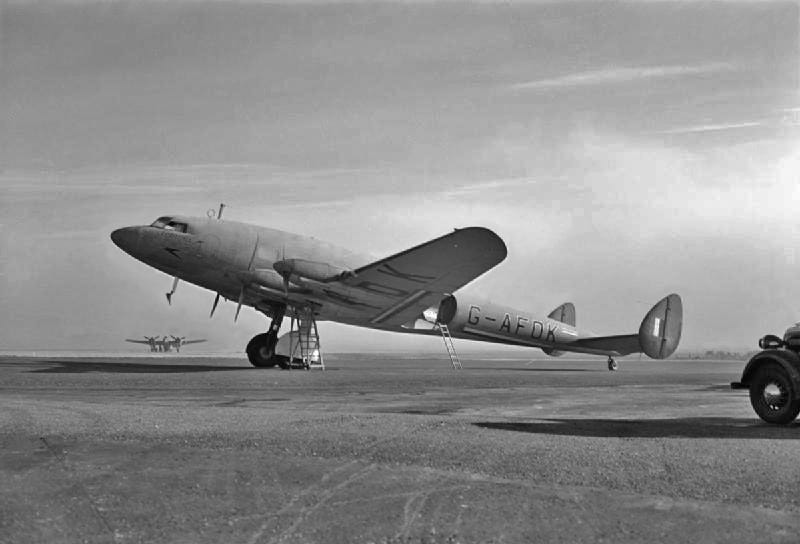
The de Havilland Albatross was built mainly from wood. Wood was chosen because it was lightweight, strong, and could be produced with a smooth aerodynamic surface. Instead of solid timber, it used a sandwich structure made from thin birch plywood bonded to a lightweight balsa wood core. The birch plywood provided strength, while the end-grain balsa added stiffness without much weight. This reduced the aircraft’s overall weight, improved fuel efficiency, and increased speed compared with many 1930s aircraft. The smooth wooden skin also produced less drag than the riveted metal construction then in use. Although the design was advanced and performed well, it required skilled craftsmanship and careful maintenance to protect the wooden structure from moisture.
In 1938, De Havilland suggested to the British Air Ministry that a scaled-down twin-engined Albatross derivative would make a great bomber, unarmed, immune to fighters by dint of higher speed. Something that could carry a decent load to Berlin. The Air Ministry didn’t like the idea of an unarmed wooden combat aircraft. I sometimes think the Mosquito story is presented almost as if it sprang from nowhere. Clearly it did not. Likewise, I take issue with